
Service 01
Roof renovation and full re-roofing
Re-roofing is not simply putting tiles back. It means dealing with what sits underneath them — the deck, the underlay, the battens — and then rebuilding a covering that will hold against rain, wind and frost.
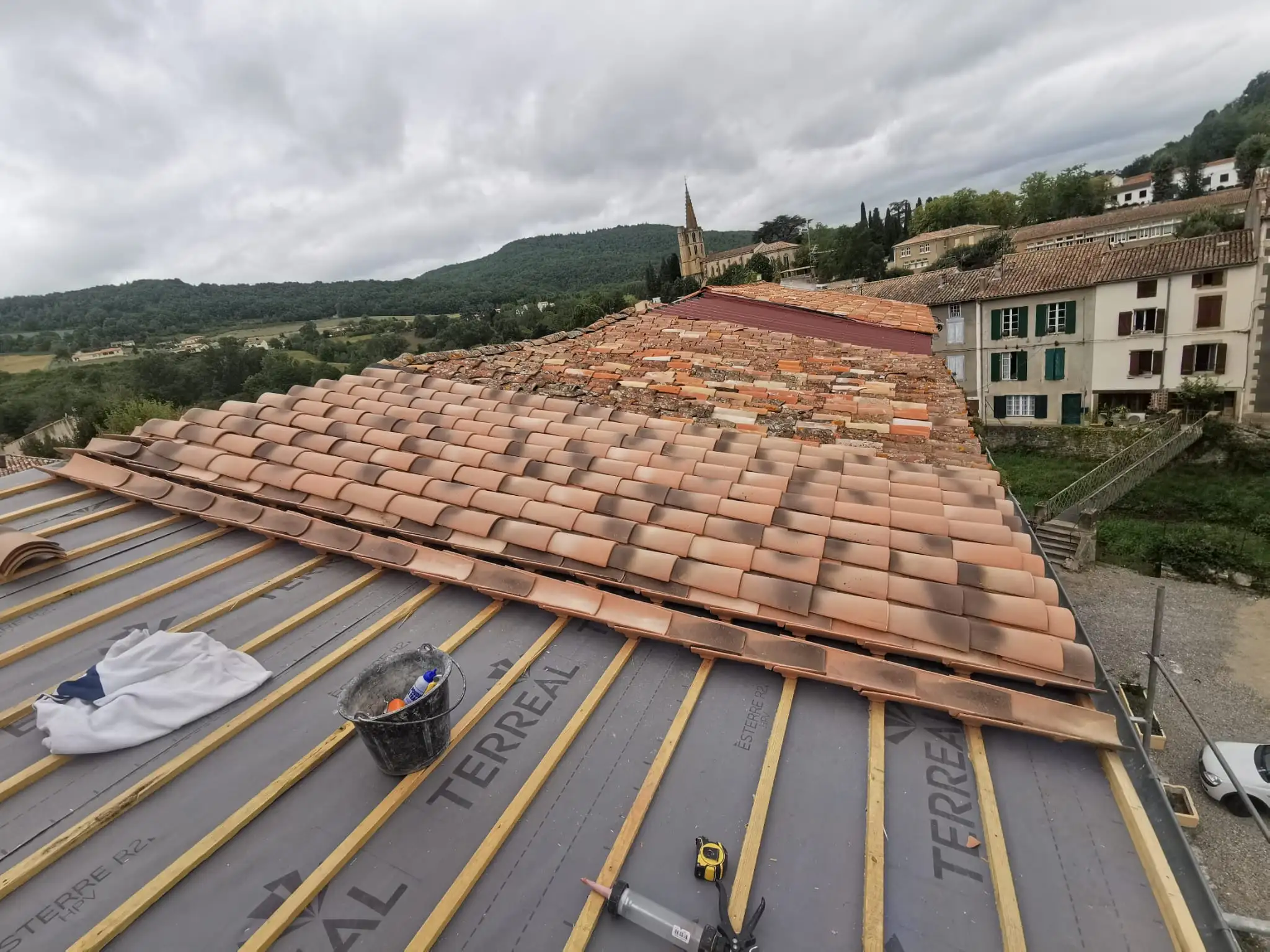
On older properties across the Minervois and the upper Aude valley, the tiles usually sit straight onto boarding laid decades ago, with nothing in between. While the tiles are sound, it holds. Once they turn porous or start to slip, there is nothing left to stop the water.
A re-roof takes the whole thing back: strip the covering, put the deck right, fit an underlay, re-batten, then relay the tiles — the original ones where they are still good, made up with matching tiles where they are not.
Assessing the roof
When re-roofing is the right answer
A roof does not fail overnight. These are the signs that keep coming up on coverings reaching the end of their life.
-
The same patch keeps letting water in
A leak patched two or three times that returns after every heavy downpour is rarely a one-off fault. Usually it is the deck, or the roof as a whole, that has had enough.
-
The tiles are breaking up on the surface
A frost-damaged tile flakes, delaminates and sounds hollow. It no longer sheds water properly. Once that spreads across a good part of the slope, replacing tiles one by one stops making sense.
-
The boarding has moved
Split planks, boards sagging between rafters, timber softened by damp or attacked by insects: a deck that shifts eventually pulls the tile courses above it out of line.
-
Patch repairs are stacking up
When every spell of strong wind brings another call-out, the running total starts to overtake what a proper job would have cost.
-
There is no underlay at all
True of a great many older French roofs. Nothing stops wind-driven rain or fine snow getting under the tiles, and nothing keeps dust out of the roof space.
-
A sale or a purchase is coming up
Knowing the real state of the roof changes the conversation entirely — whether you are selling, or have just bought the place.
Re-roofing is not always the answer. Something localised — a few slipped tiles, tired flashing — is dealt with as a targeted repair. See roof repairs
How it goes
What a re-roof actually involves
The order never changes: each stage depends on the one before. What happens between stripping and relaying is what decides how long the roof lasts.
-
Stripping and sorting
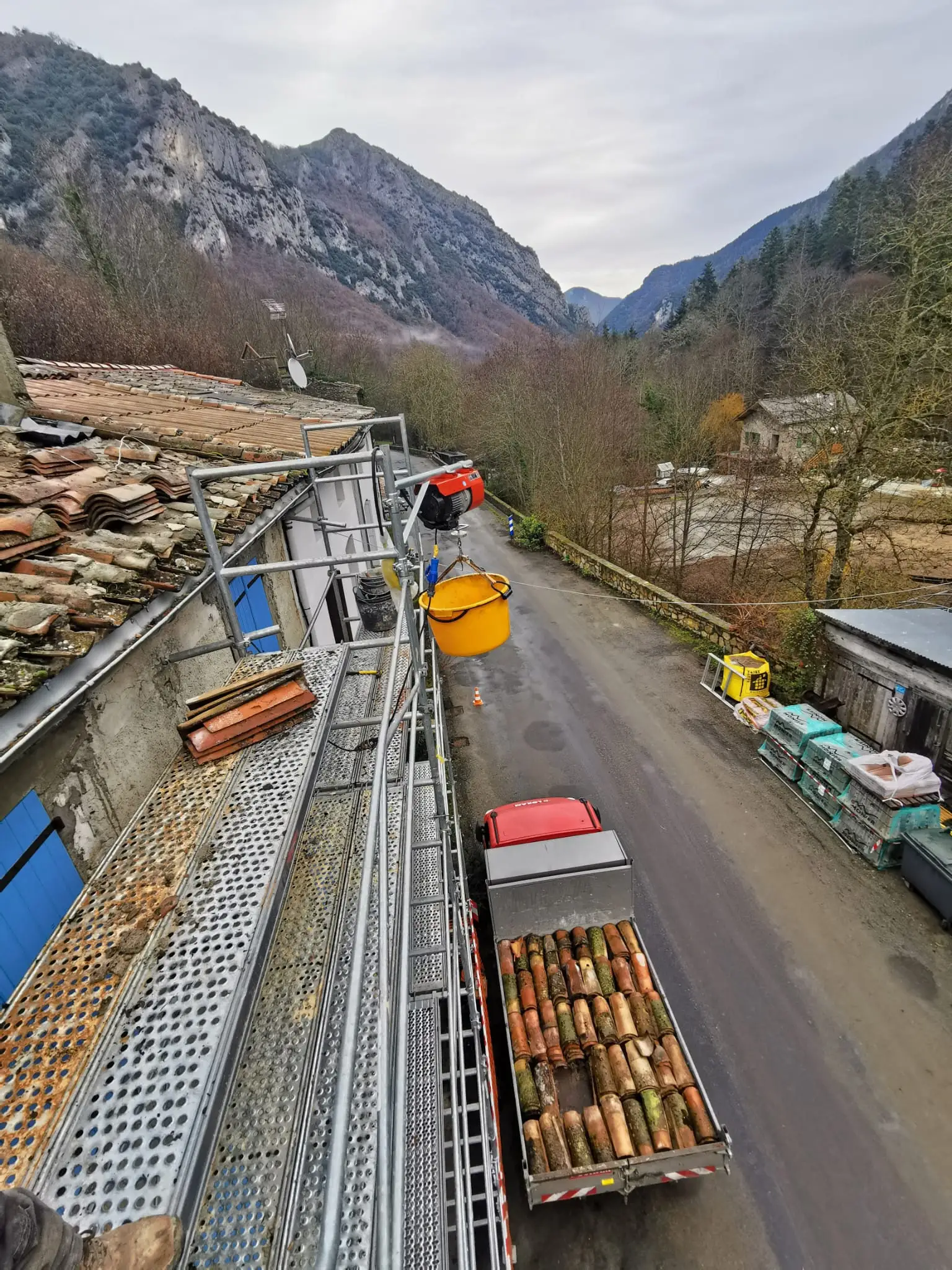
The covering comes off course by course. Sound tiles are set aside for reuse; the rest go. On an old roof this sorting decides how the finished job will look — those are the tiles that give it its weathered face.
-
Putting the deck right
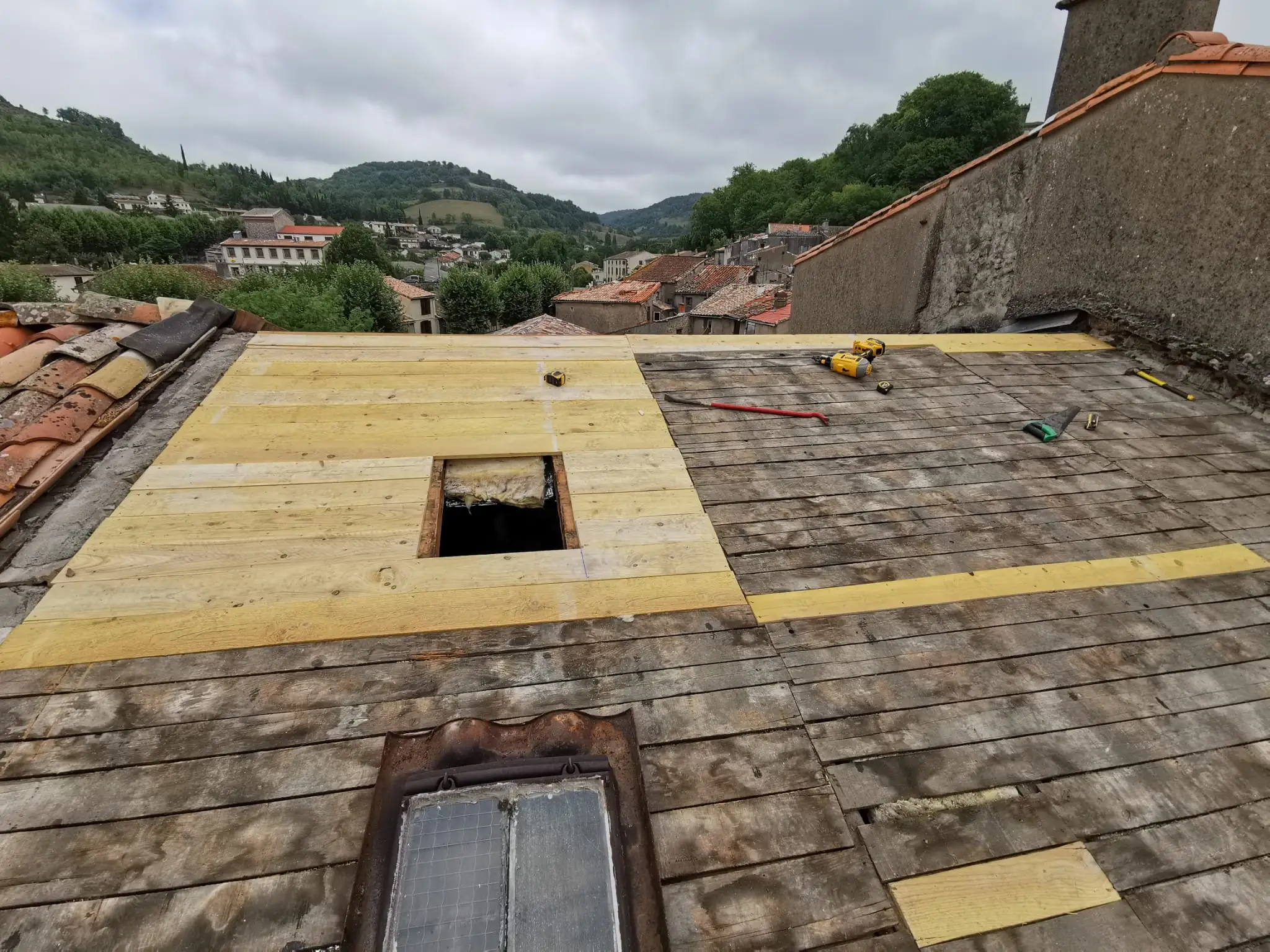
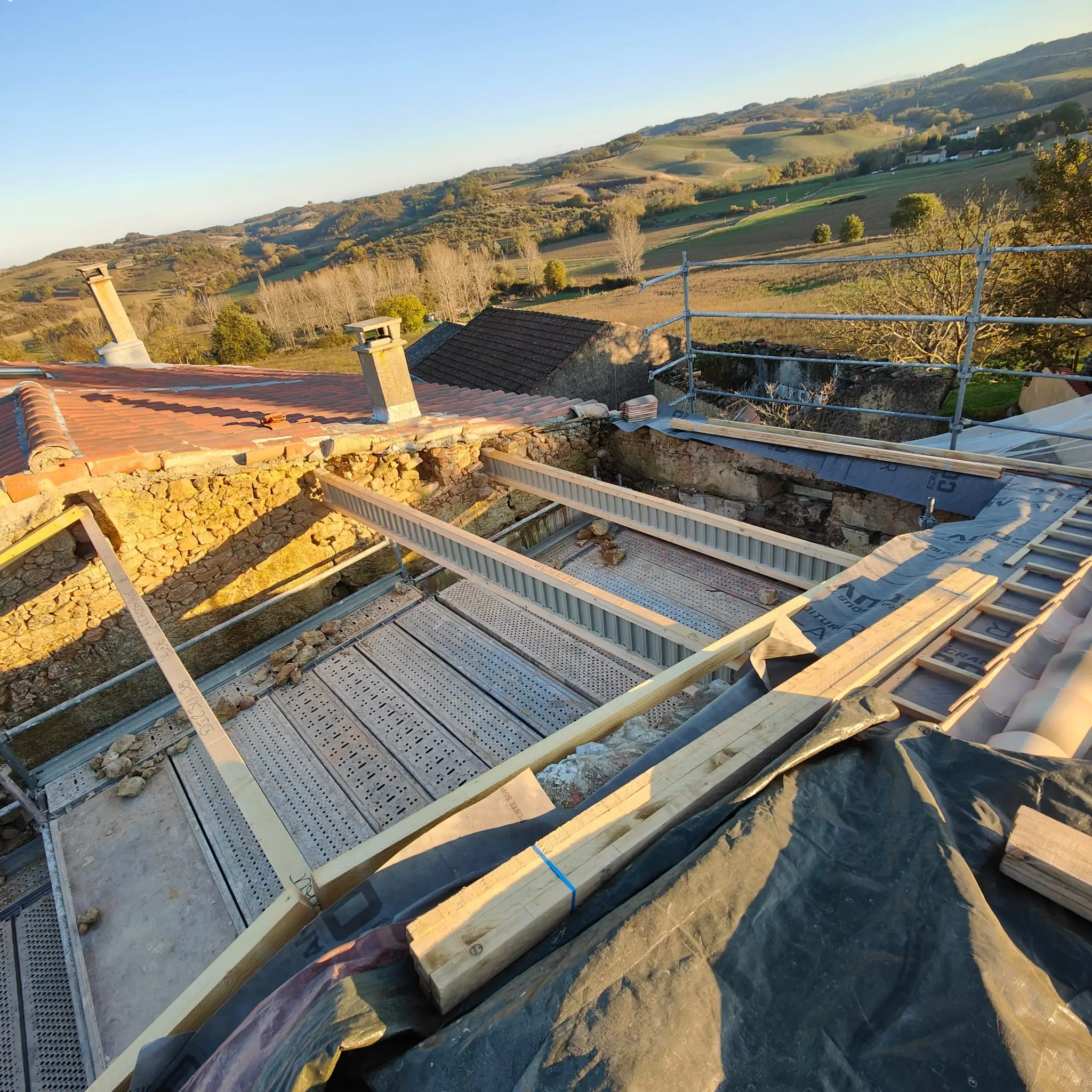
With the tiles off, the boarding is exposed. Split or sagging planks are replaced and weak areas made good. Where the roof structure itself has suffered, rafters and purlins are dealt with before anything else goes back.
-
Fitting the underlay
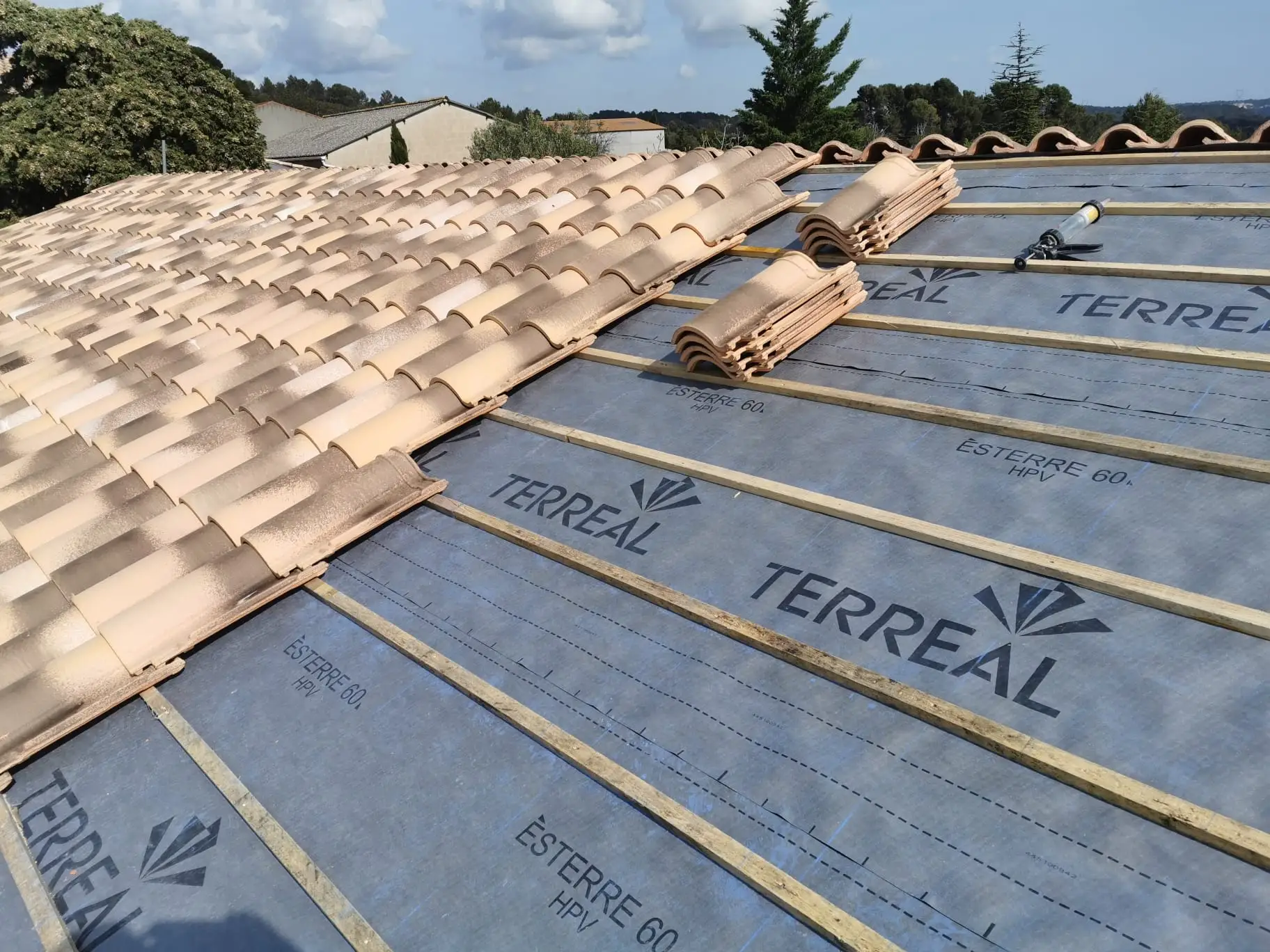
A breathable membrane is fixed across the whole surface — the second line of defence under the tiles. It carries away any water or fine snow that gets past them, and keeps dust out of the roof space.
-
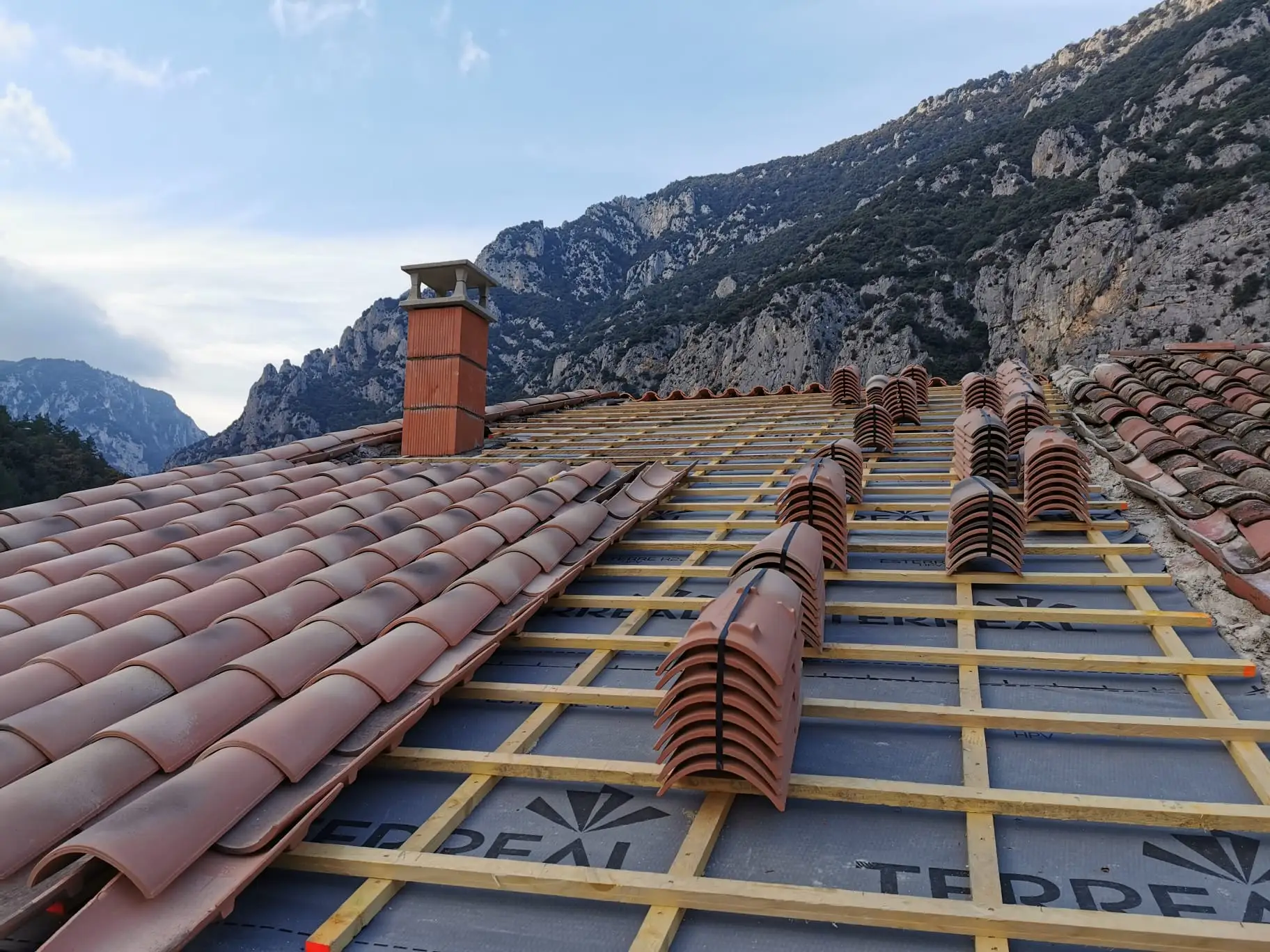
Counter-battens and battens
Counter-battens create an air gap so the deck can breathe. The battens then go on at the tile gauge — that setting-out is what gives the courses their overlap and their line.
-
Relaying and the details
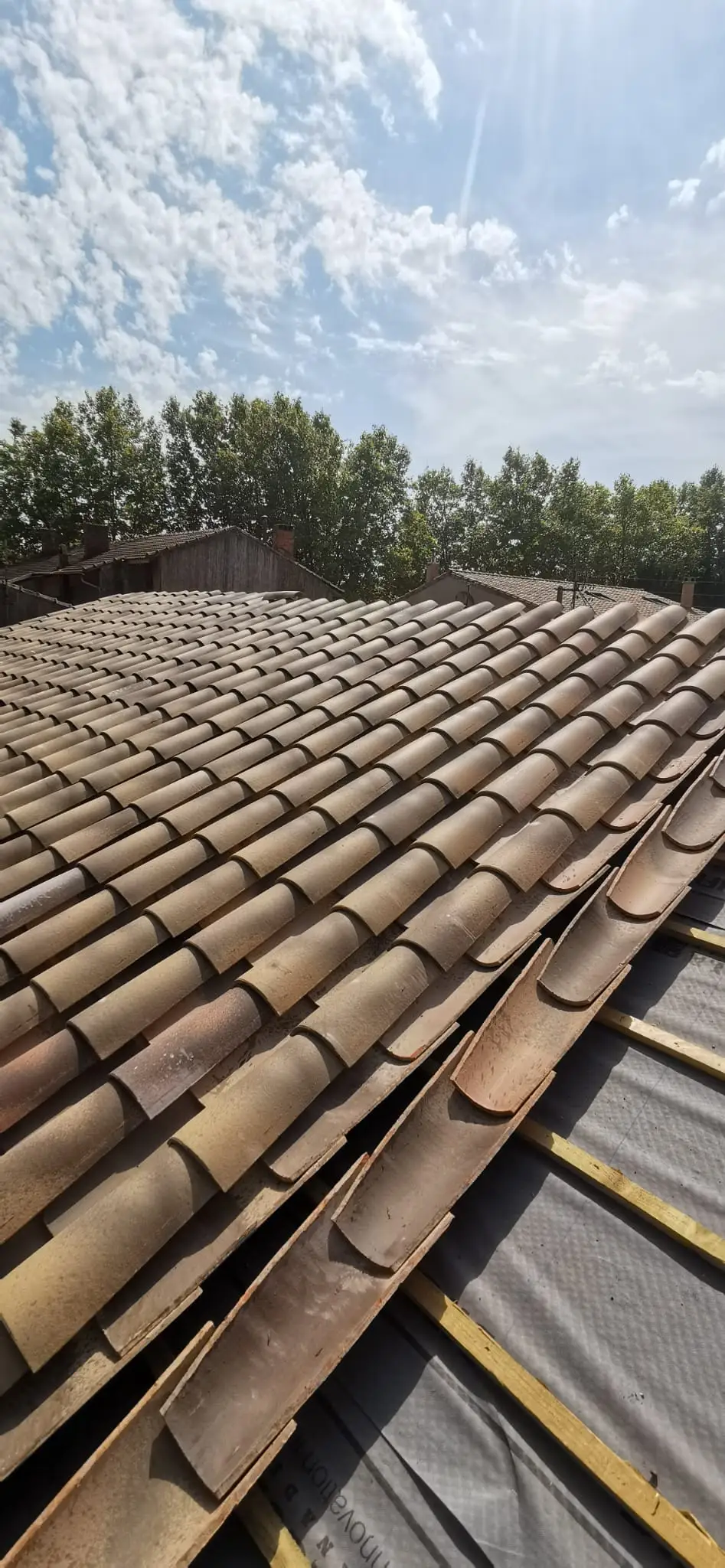
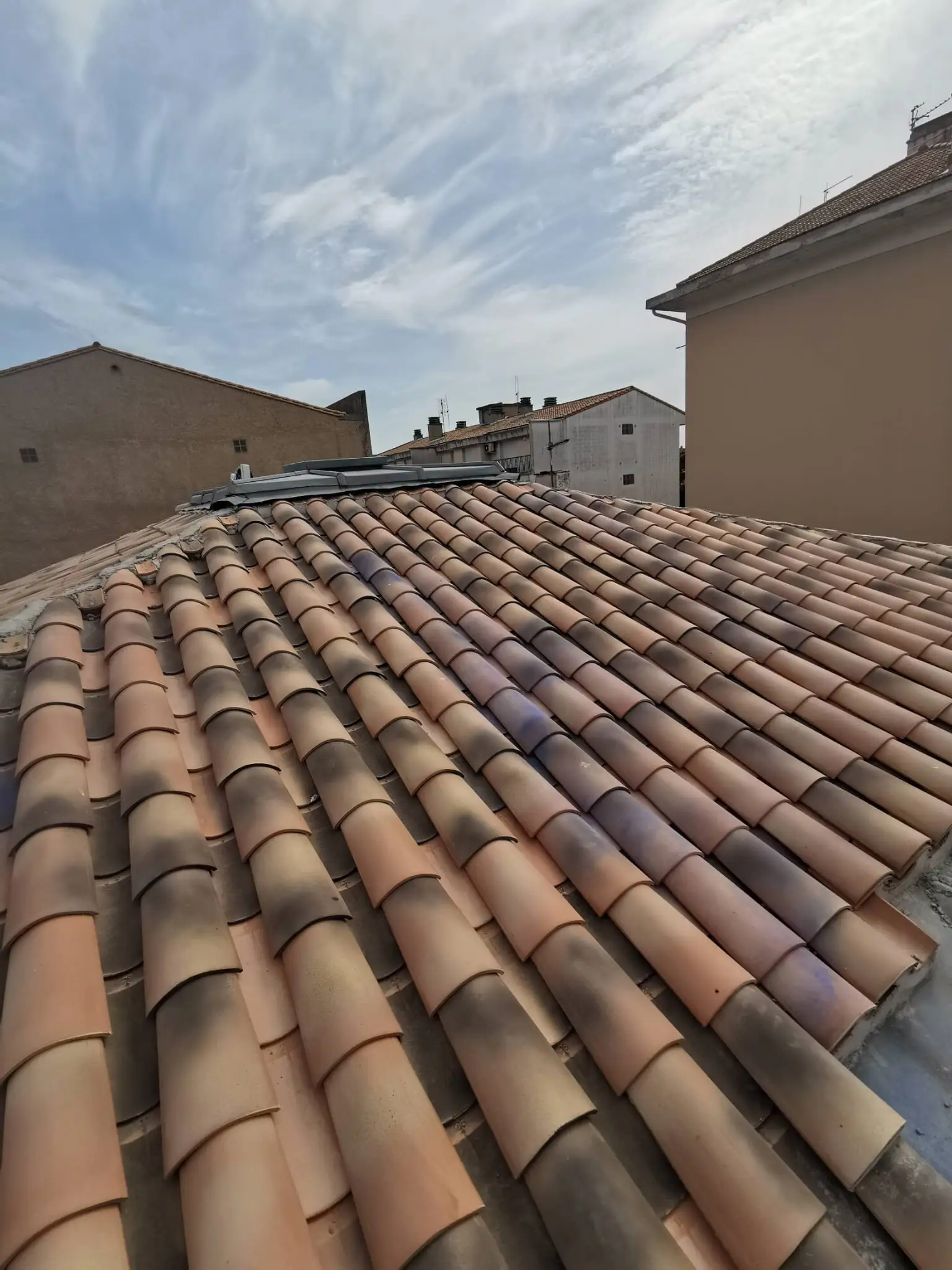
The tiles go back up course by course, unders and overs. Then come the places where the covering stops and everything is decided: ridge, verges, chimney abutments, rainwater outlets.
Three assumptions about re-roofing
- What people assume A re-roof means new tiles.
- What actually happens No — and on an old building often the opposite. Sound canal tiles are stripped, sorted and relaid, preferably on the slopes visible from the street, because they carry a patina no new tile imitates. New ones make up the shortfall, ideally at the rear.
- What people assume The price is worked out per square metre.
- What actually happens Area gives an order of magnitude. What makes the hours is the awkward parts — stacks, valleys, verges, wall junctions — and the state of the deck. A small roof with three chimneys costs more than a large plain slope.
- What people assume Might as well put underlay everywhere, it can only help.
- What actually happens A badly laid underlay is worse than none. Without counter battens there is no air gap: moisture stays trapped against the deck instead of leaving, and the timber rots from below with nothing showing.
What points to a re-roof rather than a repair
- Several unrelated marks One stain is an awkward detail. Three in different places point to the deck, or to the covering as a whole.
- Tiles splitting into flakes A delaminating tile has taken water and then frost. It cannot be repaired, and it announces others on the same slope.
- A ridge line that undulates Never a tile question: it is the frame. And it is dealt with before anything is relaid.
- A loft floor stained over several metres Water travels in the timber before it comes through. A wide mark means a long-standing leak, so a deck already affected.
- Visible successive repairs Three generations of patching on one slope costs more, added up, than doing it properly once.
What is done, and in what order
- Stripping by hand, with sorting Course by course. Three piles: what goes back on, what serves elsewhere, what is cracked or delaminating.
- Exposing and probing the deck The moment of truth. We probe the boards and the rafter feet, and show you what we found before going on.
- Repair, board by board We replace what is damaged. Sound timber stays — stripping a whole deck because a square metre is soft makes no sense.
- Underlay, counter battens, battens In that order. Counter battens create the air gap; the battens are set to the tile’s gauge, and that setting-out decides the final alignment.
- Relaying, old tiles first Then the awkward parts — ridge, flashings, rainwater goods — which sit over everything else, so they come last.
On site
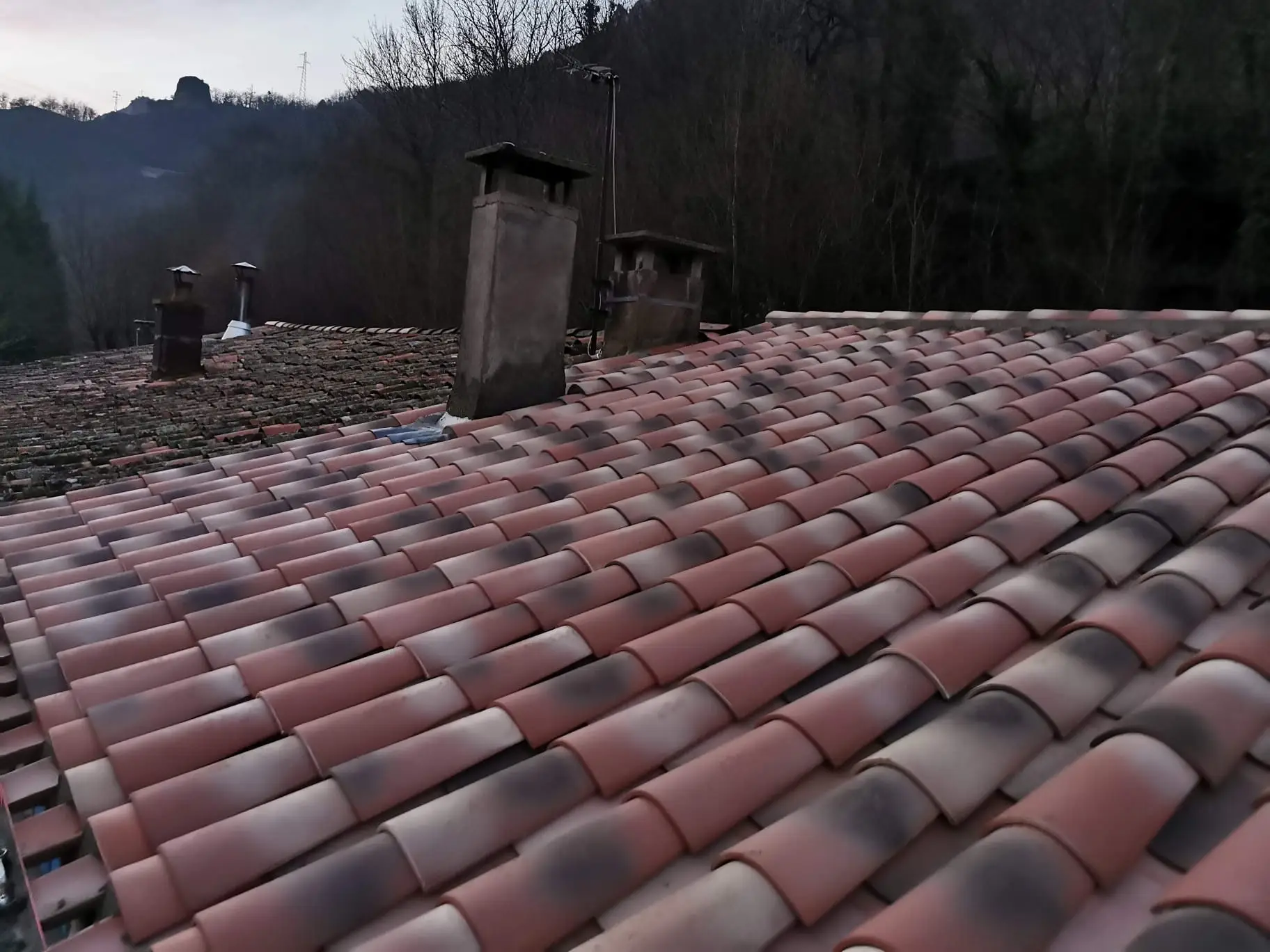
Re-roofing jobs, as they actually look
All of these are MBS Roofing Work South France sites. They show the part nobody sees again once the roof is closed up.
What is worth doing at the same time
- Zinc work, guttering and box gutters The scaffold is up and the eaves are within reach — the moment to replace tired guttering rather than come back to it in two years.
- Ridges, verges and chimney flashing These details are rebuilt along with the covering. Doing them separately means paying for roof access twice.
- Roof repairs and tile replacement If the problem turns out to be contained, a targeted repair does the job — and costs a great deal less.
Where we work
Re-roofing jobs run across our four areas. Scaffolding and material deliveries make being local matter more than people expect.
Minervois & Alaric Haute-Vallée de l’Aude Corbières Montagne Noire & Cabardès
Common questions
Does the whole roof have to come off?
Not necessarily. If only one slope is at fault and the rest is sound, the work can be limited to that side. Fitting an underlay does mean stripping the area concerned, though — it goes under the tiles, not over them.
Can the original tiles be reused?
Very often, and on a period property it is usually the better choice: a sound old canal tile has already proved itself, and gives the finished roof a patina new tiles simply do not have. Sorting happens as the roof comes off, tile by tile. There are almost always some to make up, chosen to sit well with what is there.
What is an “écran de sous-toiture”?
It is the French term for a roofing underlay — a membrane laid over the deck, under the battens. It catches wind-driven rain and fine snow that get past the tiles and carries them down to the eaves, and it keeps dust out of the roof space. Many older French roofs have none, which explains problems that are invisible from outside.
What is the difference between “réfection” and “réparation”?
A “réparation” is a repair: something localised, put right where it is. A “réfection” is a re-roof: the covering comes off and goes back, with the deck and underlay dealt with in between. The two words appear on French quotations and mean quite different amounts of work.
Is scaffolding needed?
For a re-roof, in almost every case. There has to be safe access along the eaves, a way of getting materials up and the stripped covering down. Erecting it is part of the job.
Let’s talk about your roof
Tell us what you can see — how old the covering is, what is going wrong, what you have in mind. Write in English; that is entirely fine.