
Roofing guide
The roof care calendar
A roof does not decay steadily. It decays in episodes, and those episodes have seasons. Here are the ones that matter in the Aude.
Between a tramontane that blows for days at a time, the short violent storms of late summer, and frost that really only concerns the Haute Vallée, a roof in the Aude does not live the life of a roof in a damp northern plain.
This calendar says what to look at through the year, what can wait, and when a roofer does not go up — because anyone promising you a job in a full tramontane is mostly promising you an accident.
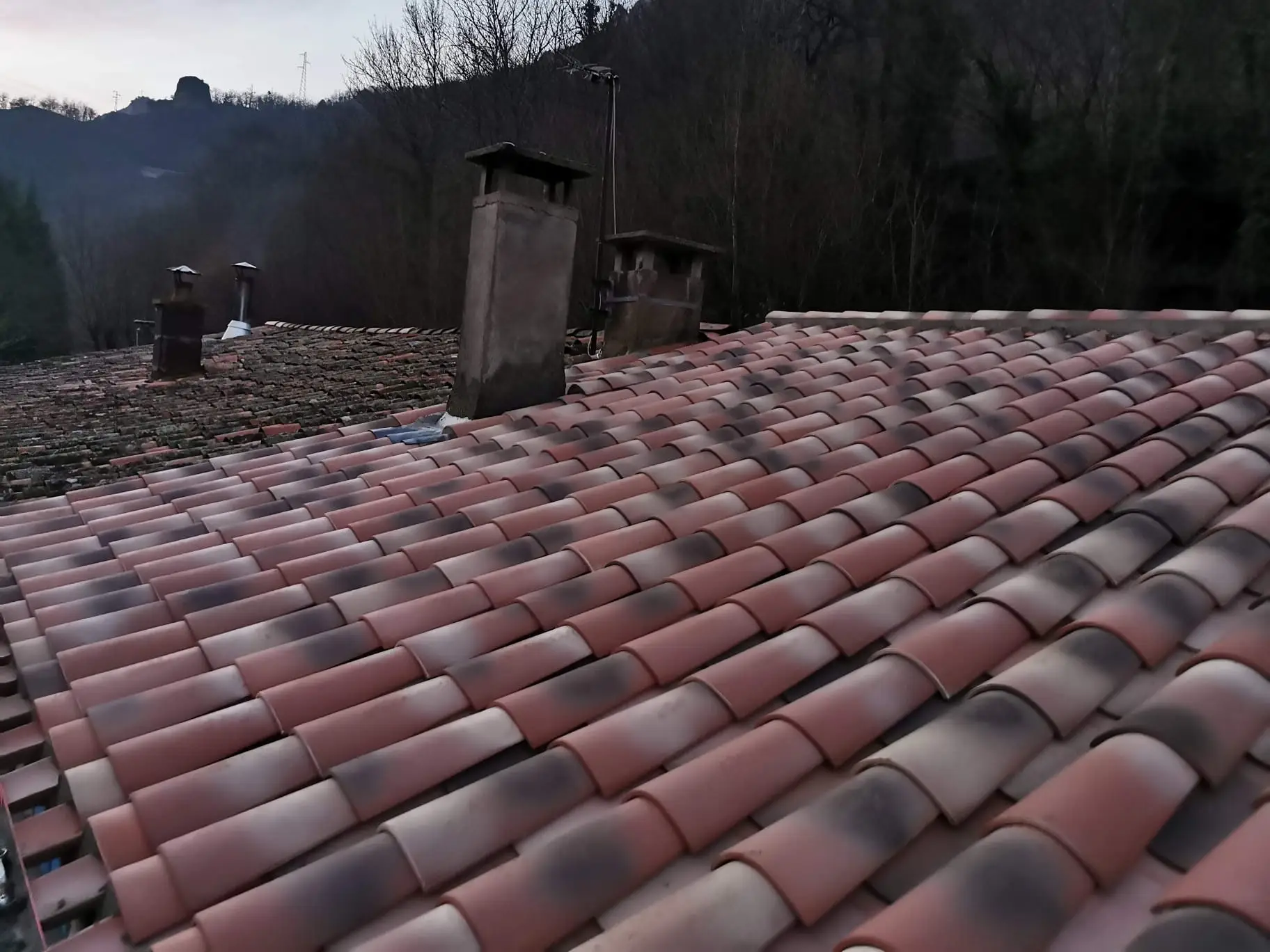
A roof’s year, in the Aude
It starts in September: the first storm reveals what the summer let through, and it is the last window before winter.
- Tramontane It blows for days at a time, always from the same quarter. It is the wind that lifts ridges and verges — not the rain.
- Frost Mainly in the Haute Vallée and the Montagne Noire. Water caught in a cracked tile or a mortar joint opens it as it expands.
- Moss growth It thrives in the mild damp months, and above all on north-facing slopes. It holds water against the clay.
- Mediterranean storms September to November, occasionally from late August. Short and violent, sometimes more water in an hour than in a month: they test the downpipes, not the tiles.
What people assume about time passing on a roof
- What people assume A recent roof does not need watching.
- What actually happens Awkward details are no stronger for being new. A badly chased flashing leaks in its first year, and you generally find out at the first heavy storm.
- What people assume If it has not rained indoors, all is well.
- What actually happens Water sometimes takes years to come through. It travels in the timber, rots it slowly, and only reaches the ceiling once the rafter holds nothing back. No stain is not proof.
- What people assume Winter is the worst season for a roof.
- What actually happens Autumn is. Winter makes a roof endure; autumn stacks everything — Mediterranean storms, leaves in the gutters, the first tramontanes — and it is the last window to act before the cold.
The four checks that matter through the year
- After every blow The ridge line from the street, and debris at the foot of the walls. Two minutes, and the most worthwhile check of all.
- Before November Gutters and downpipes cleared. Standing water that freezes distorts the ironwork and pulls the brackets out.
- In spring North slopes and chimney flashings, which have just come through winter. That is when the roof’s real condition shows.
- During the first heavy storm Watch where water overflows and where it sits. A storm is a full-scale test nobody thinks to use.
What we do, season by season
- In autumn, we close up Jobs in progress are closed before the first episodes. It is also the season for sorting awkward details before winter.
- In winter, we sheet and watch Nobody goes onto a frozen roof or up in a strong wind. An emergency gets sheeted to hold; the rest waits for a window.
- In spring, we diagnose It is the best time of year to judge a roof: it has just come through winter, and anything that was going to move has moved.
- In summer, we prepare Moss removal, rainwater repairs, awkward details. Everything that must be ready before the first September storm.
- All year, we follow the forecast An open roof cannot wait for rain. A roofer’s diary is built on weather windows, not on appointments.
Have you spotted something?
A ceiling mark or a tile on the ground never gets better on its own. Say what you can see, and when you first saw it.