
Carcassonne · 11000
Roofer in Carcassonne
Three towns in one: the Cité, the Bastide, and everything that has grown around them since. None of the three shares the same building stock, the same rules, or the same roofs.
Carcassonne is the geographic centre of what we do: the business is registered on its outskirts, and the four areas we cover radiate from here — the Minervois east, the Montagne Noire north, the Corbières south-east, the Haute-Vallée south.
It is also where the building stock changes fastest from one street to the next. The Bastide Saint-Louis lines up thirteenth-century adjoining houses on a grid; two kilometres away, 1970s estates raise the opposite questions entirely. The quotation does not look the same in the two cases — and neither does the paperwork.
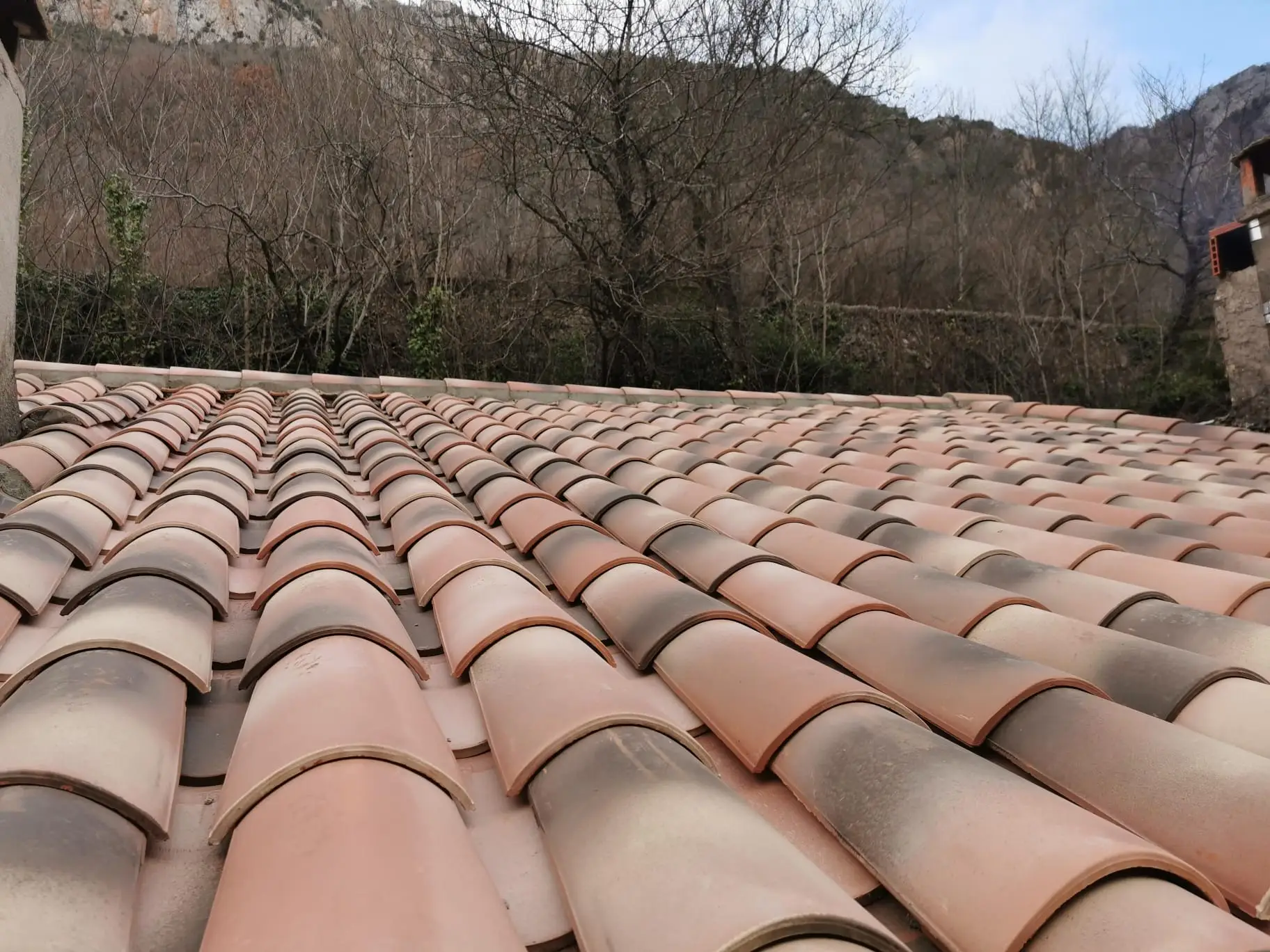
The ground
Three Carcassonnes, three ways of working
Which part of town your roof is in changes everything: the materials allowed, the consents required, and how anyone gets to the job.
-
The Bastide Saint-Louis — protected sector
In the protected sector of the lower town, roof coverings are prescribed as canal tile or terracotta tile, with Roman tile excluded. Work visible from the public street goes through the opinion of the Architecte des Bâtiments de France, who also rules on colour. It is not an obstacle — it is a lead time to build in, and a supply constraint to anticipate.
-
Within sight of the Cité
The Cité is a listed historic monument and a World Heritage site. Within the protected perimeter around a listed monument, even a like-for-like re-roof requires a prior declaration with the heritage architect’s opinion. That perimeter reaches further than most people expect, and it does not spare ordinary houses.
-
Faubourgs, outskirts and estates
La Gravette, Grazailles, Montlegun, or the surrounding villages — Palaja, Villemoustaussou, Pennautier, Cazilhac. Here roofs stand on their own, access is clear and the carpentry is more recent. These are the simplest jobs to organise, and usually the quickest.
What people assume about a town-centre job
- What people assume A repair needs no permission.
- What actually happens It depends on what is visible from public space and which sector the house sits in. The question arises BEFORE the work, not during: it is the first thing to check at a central address.
- What people assume The roof is the hard part.
- What actually happens In an old town centre, getting to it usually is. Narrow street, parking, permission to occupy the highway, room for the skip: logistics set the timetable far more than the area to be covered.
- What people assume All canal tiles are the same.
- What actually happens On an old building, colour and patina matter as much as shape. A new tile that is too regular shows instantly beside an old covering — which is exactly why sound stripped tiles are worth reusing.
What to look at on a town-centre house
- Party-wall junctions The built fabric is continuous: every house touches its neighbours. It is the first place water gets in, and the hardest to see from the ground.
- Chimney stacks Numerous and old. The flashing joining them to the covering is the most common cause of a long-standing leak.
- Downpipes on the elevation Often old and undersized for late-summer storms. Repeated overflow stains the façade and eventually damages it.
- Whatever shows from the street It is also what the authorities will look at. A mismatched course of tiles on an old town elevation is not only a matter of taste.
What we check before pricing
- Reading the regulation, at the address Before any pricing. What the sector allows decides the material, and therefore the quote — checking afterwards costs a whole job to redo.
- A photographic survey from the street We photograph what will be visible once the work is done. That is what the authorities will look at, and the neighbours.
- An access survey Street width to the metre, skip position, parking constraints, and any highway occupation permit needed.
- Opening a chimney flashing We expose the junction over a short length to see whether a chase exists in the masonry, or whether mortar was simply laid against the wall.
- Sorting a sample of tiles A hundred stripped tiles is enough to judge the reusable proportion, and therefore the final colour of the covering.
Where it sits
Carcassonne in the valley
The four towns of the Haute-Vallée, running north to south along the Aude, in their real order.
Positions to scale · areas approximate · rings at 10, 20 and 30 km from Carcassonne.
- Minervois & Alaric The area MBS Roofing Work South France works from, running from the Aude plain to the lower slopes of the Alaric, and across into three villages in the Hérault.
- Haute-Vallée de l’Aude From Limoux up through the gorges towards Quillan — a valley of stone villages where roofs take a beating.
- Corbières Villages of real character with old roofs, where renovation has to respect what is already there.
- Montagne Noire & Cabardès Higher, wetter and more exposed — roofs age differently up here than they do down on the plain.
Towns
The other towns in the valley
Each has its own page, because each raises different questions.
Services
What we do in Carcassonne
All six, without distinction. In the protected centre, sourcing compliant tiles and dealing with flashings against party walls take up a large share of the work.
What we cover
Carcassonne, and everything around it
Carcassonne is where we start from, not where we stop. The four areas we cover are arranged around it: Trèbes and the Minervois east, Conques-sur-Orbiel and the Montagne Noire north, Lagrasse and the Corbières south-east, Limoux and the Haute-Vallée south.
The immediate ring — Palaja, Villemoustaussou, Pennautier, Cazilhac, Villedubert — is a day’s work away with no special logistics. It is the area where a one-off job is easiest to fit in.
Common questions in Carcassonne
My house is in the Bastide — can I use any tile I like?
No. The protected sector prescribes canal tile or terracotta tile and excludes Roman tile. Colour is also among the points the Architecte des Bâtiments de France rules on. In practice this is settled beforehand: you choose a compliant supply before filing the declaration, not after.
Do I need consent to re-roof in Carcassonne?
A like-for-like re-roof generally requires a prior declaration. In the protected sector and within sight of the Cité, that declaration is examined with the heritage architect’s opinion, which lengthens the timescale. Outside those perimeters it is simpler. The mairie will tell you which regime applies to a given plot.
Do you work in the villages around Carcassonne?
Yes — it is our densest area: Palaja, Villemoustaussou, Pennautier, Cazilhac, Villedubert, Berriac and the rest of the ring. The business is registered there, journeys are short, and a one-off job is easy to arrange.
Do you work on adjoining houses in the centre?
Yes. In the Bastide it is the usual arrangement. It calls for two extra things: careful work on the flashings and junctions against party walls, where most water gets in, and often permission to occupy the public highway for the scaffold.
A roof in Carcassonne?
Tell us the district: Bastide, near the Cité, faubourg or outskirts. That is what determines the consents to plan for, long before the nature of the work.